

Webinars are one of the few lead generation channels where the lead voluntarily spends 30 to 60 minutes engaging with your content before you ever contact them. That level of voluntary attention is rare. A form fill gives you a name and an email. A webinar gives you a name, an email, and evidence of interest — how long they watched, what questions they asked, whether they clicked the offer.
But this advantage is only realized if the webinar is built as a lead generation system, not just a presentation. The presentation educates. The system captures, qualifies, and converts. Here is how to build it.
Attracting registrants
Registration is the first conversion. Before anyone attends the webinar, they must register — and registration is a conversion event that should be optimized like any other. The registration page must communicate the value of the webinar clearly: what the attendee will learn, who it is for, and why it matters now.
Traffic sources matter. Paid ads can drive registrants quickly but at a cost. SEO and content marketing drive registrants slowly but sustainably. Email lists drive registrants at the lowest cost but are limited by list size. The strongest lead generation webinars use multiple sources — paid for speed, organic for sustainability, email for efficiency.
For evergreen and just-in-time webinars, the registration page works continuously. Traffic from any source — ads, search, social, email — flows into the same page, and the webinar runs on the attendee's schedule. This turns the webinar into a persistent lead capture asset, not a one-time event.
Capturing the right information
The registration form is where you capture lead data. The principle is simple: ask for the minimum information needed to follow up effectively. Name and email are usually sufficient. Phone number is valuable if SMS follow-up is part of your strategy. Company name and size are useful for B2B qualification but add friction.
Every additional field reduces registration rate. The question is whether the additional data is worth the lost registrations. For most webinars, name and email capture the most leads. The qualification happens during the webinar — through attendee behavior — not through the registration form.
Qualifying leads through behavior
This is where webinars outperform every other lead generation channel. The webinar itself is a qualification tool. An attendee who watches 90% of the presentation and asks three questions is a different lead than one who registers and never attends. An attendee who clicks the offer is a different lead than one who does not.
Behavioral data — watch time, questions asked, offer clicks, poll responses — tells you the lead's intent level without asking them a single qualification question. This is data you cannot get from a form fill. It is data the lead provides voluntarily, through their actions, without friction.
A form fill tells you who the lead is. A webinar tells you how interested they are. The combination — identity plus behavioral intent — is what makes webinar leads higher quality than leads from any other channel.
Converting leads into conversations
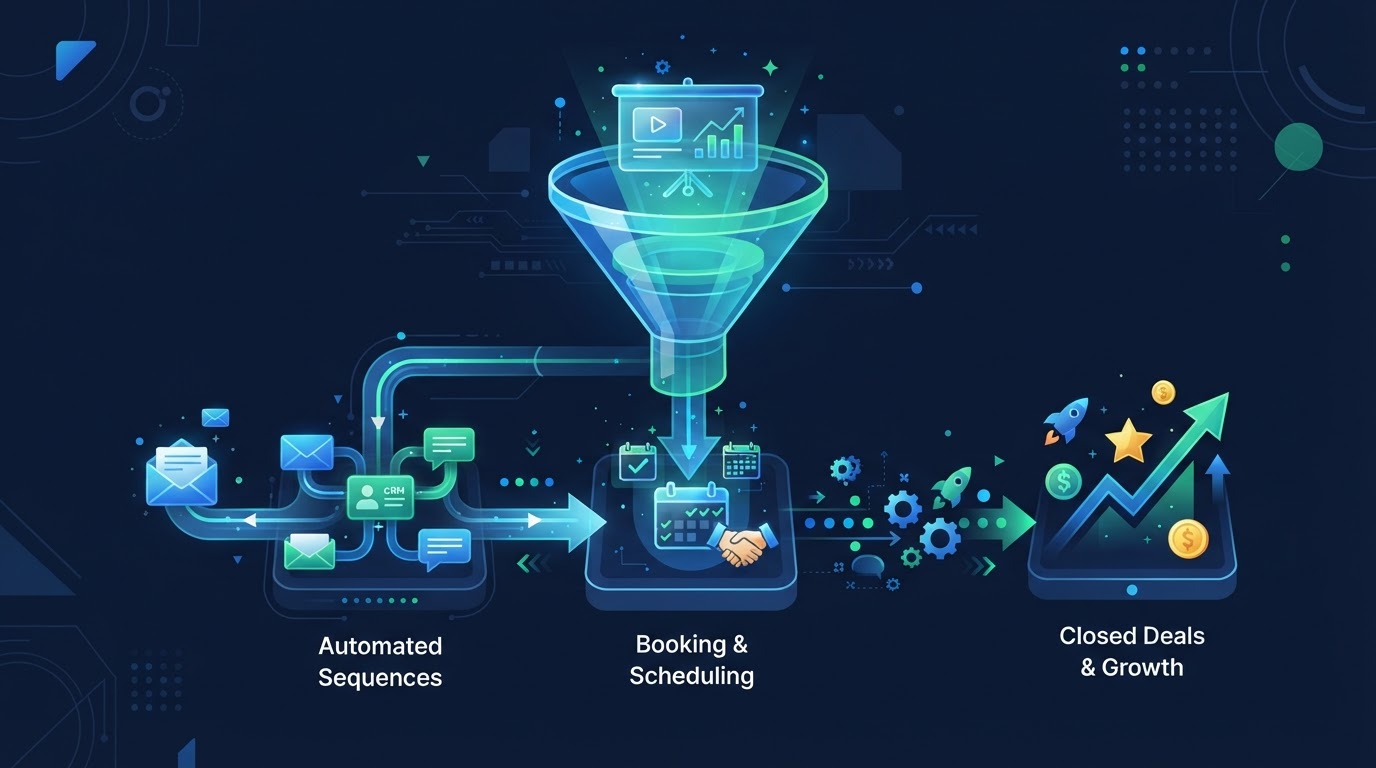
The webinar's job is not to close the sale (unless the offer is self-service). Its job is to generate qualified conversations — consultations, demos, discovery calls. The CTA should move the highest-intent attendees to book a conversation, and the follow-up should move the rest toward that same conversation over time.
The booking process should be frictionless. A calendar link, not a form. A few time options, not a back-and-forth. The attendee who clicked the offer and wants to talk should be able to book a call in under two minutes. Every additional step in the booking process costs conversations.
Nurturing leads who are not ready
Not every attendee is ready to book a call. Some need more education. Some need to see the offer again. Some need social proof. The follow-up sequence should nurture these leads — providing additional value, addressing objections, and building toward the conversation — without pressuring them before they are ready.
The key is segmentation. A full viewer who clicked the offer is ready for a direct booking CTA. A partial viewer needs more education before the CTA makes sense. A no-show needs the replay and a reason to watch. One sequence cannot serve all three. Behavioral follow-up — different messages for different segments — is what turns the full spectrum of webinar leads into conversations, not just the ones who were ready immediately.
Measuring webinar lead generation
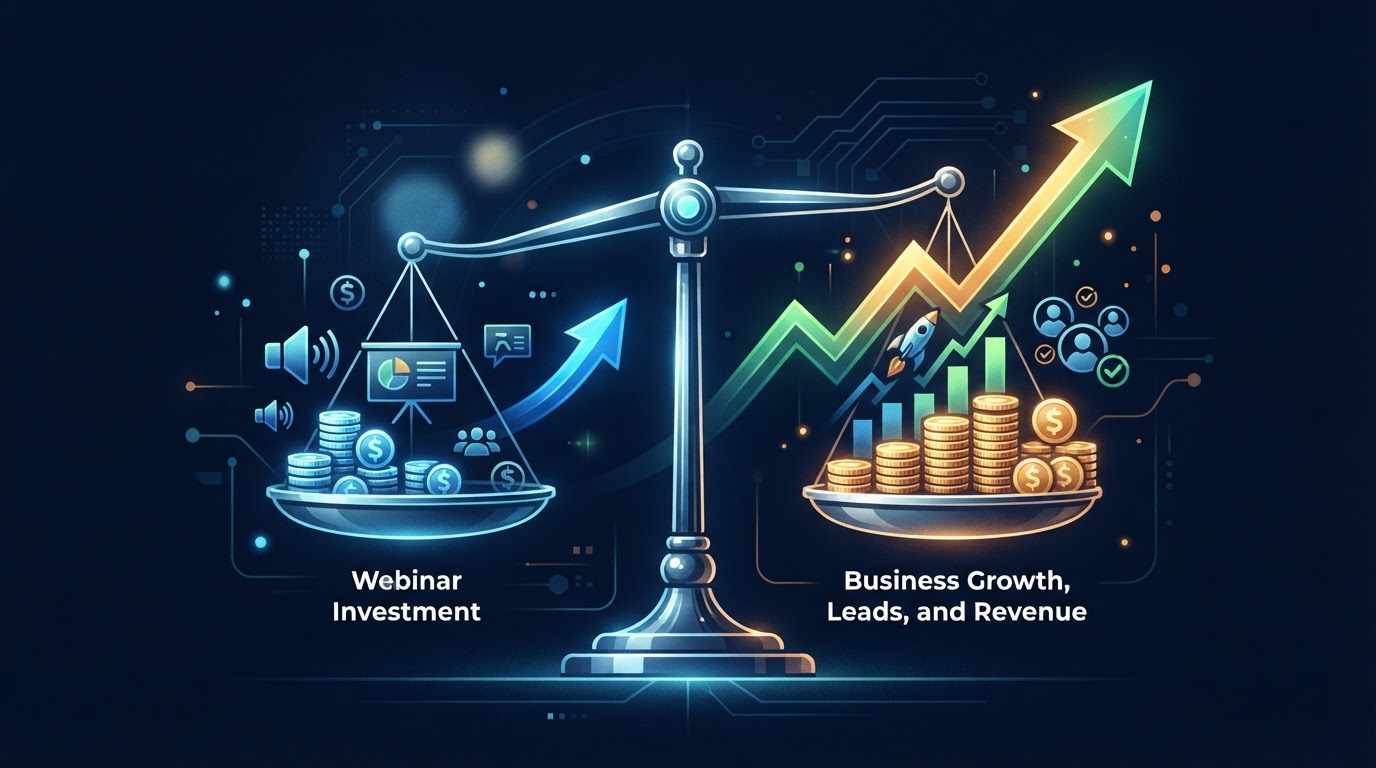
The metrics that matter are not registration count or attendance count. They are the metrics that connect the webinar to revenue: registration-to-attendance rate, attendance-to-booking rate, booking-to-closed-deal rate, and cost per qualified lead. These metrics tell you whether the webinar is generating pipeline, not just eyeballs.
Track the full funnel from registration to revenue. A webinar that generates 1,000 registrations but 2 bookings is not a successful lead generation tool. A webinar that generates 200 registrations and 20 bookings is. The number that matters is not how many people came. It is how many people acted.
See AI webinars in action
Watch how WebinarBoostAi creates, presents, and engages with webinars using AI.
Book A DemoFrequently Asked Questions
Are webinars good for lead generation?
Yes. Webinars are one of the few channels where leads voluntarily spend 30-60 minutes engaging with your content before you contact them. They provide not just contact information but behavioral intent data — watch time, questions asked, offer clicks — that qualifies the lead without additional friction.
How do I generate leads with webinars?
Build the webinar as a system: optimize the registration page as a conversion event, capture minimum necessary data (name and email), qualify leads through behavioral data during the session, convert high-intent attendees with a frictionless booking process, and nurture the rest with segmented follow-up sequences.
What information should I collect on a webinar registration form?
The minimum needed to follow up effectively — usually name and email. Phone number is valuable if SMS follow-up is part of your strategy. Every additional field reduces registration rate. Qualification happens through attendee behavior during the webinar, not through the form.
How do I qualify webinar leads?
Through behavior. Watch time, questions asked, offer clicks, and poll responses all indicate intent level. An attendee who watches 90% and clicks the offer is a high-intent lead. One who registers and never attends is low-intent. This behavioral qualification requires no additional friction for the lead.
What metrics matter for webinar lead generation?
Registration-to-attendance rate, attendance-to-booking rate, booking-to-closed-deal rate, and cost per qualified lead. These connect the webinar to revenue. Registration and attendance counts alone do not indicate whether the webinar is generating pipeline.