
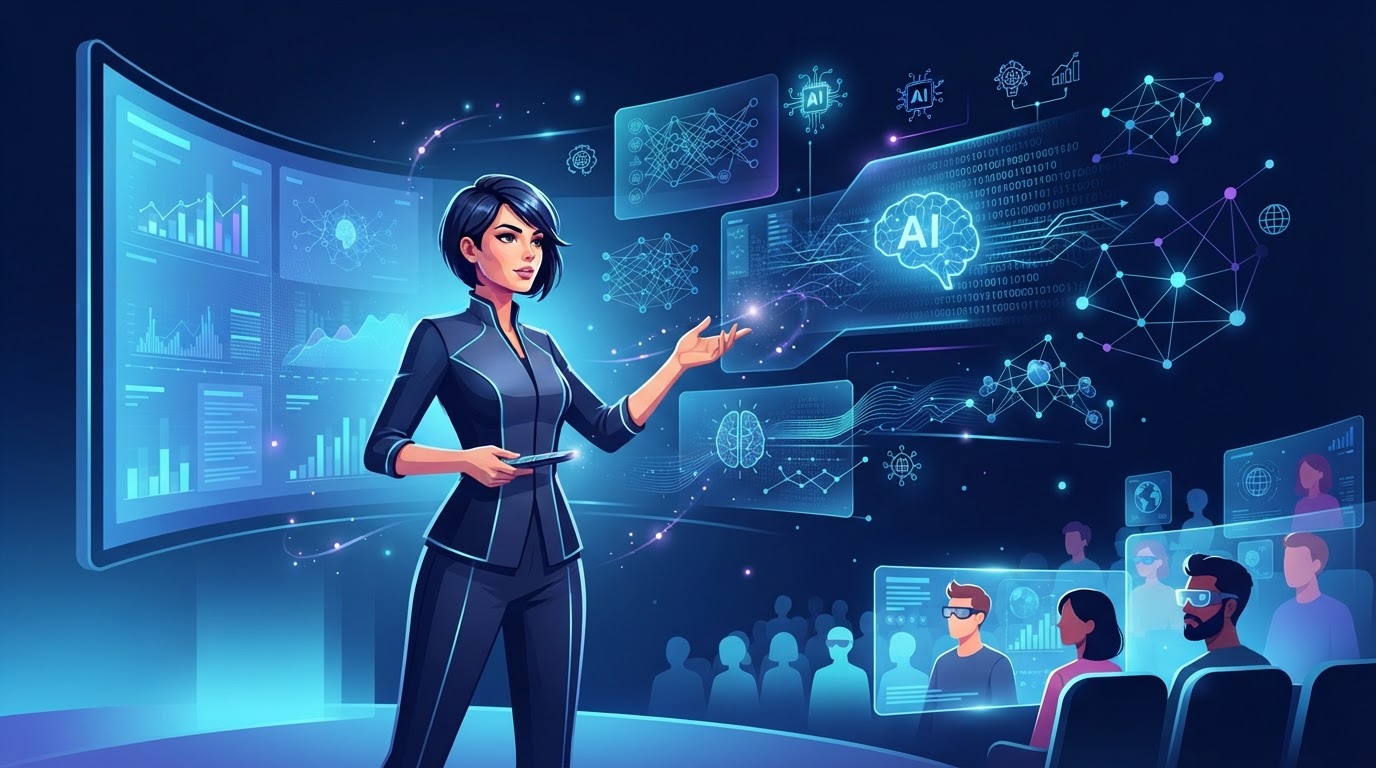
The webinar is undergoing a fundamental shift. For two decades, a webinar meant a live event — a presenter, a fixed time, a group of attendees, and a recording that was usually ignored afterward. The webinar was an event on a calendar. It happened, it ended, and the value it created was largely confined to that moment.
AI is changing that. The webinar is becoming a persistent asset — created once, delivered continuously, engaged with automatically, and optimized over time. The presentation does not depend on the presenter's availability. The engagement does not depend on a human in the chat. The follow-up does not depend on manual effort. This is not a small improvement. It is a structural change in what a webinar is.
From events to assets
The most significant shift is conceptual. A traditional webinar is an event — it happens at a time, and its value is tied to that time. An AI-powered webinar is an asset — it exists continuously, and its value compounds over time. The same presentation that ran once can run forever. The same engagement that required a human can be handled by AI. The same follow-up that required manual effort can be automated.
This shift changes how businesses should think about webinars. A webinar is no longer a marketing campaign with a start and end date. It is a business asset — like a sales page or a product demo — that works continuously. The question is not 'when should we run our next webinar?' It is 'is our webinar asset performing, and how can we improve it?'
AI creation: from brief to presentation
The creation layer is where AI is having the most immediate impact. Traditionally, creating a webinar meant weeks of work: strategy, scripting, slide design, recording, editing. Each step was a bottleneck. AI compresses this timeline dramatically — generating the script from a brief, building the slides from the script, and producing the presentation through an AI presenter.
The direction is clear: the gap between idea and presentation is shrinking. A business that wants a webinar will describe what it needs, and the AI will generate a complete first draft — script, slides, presenter, registration page, and follow-up sequence. The human refines. The AI creates. The webinar that took weeks will take hours. The one that took hours will take minutes.
AI presenters: the uncanny valley is closing
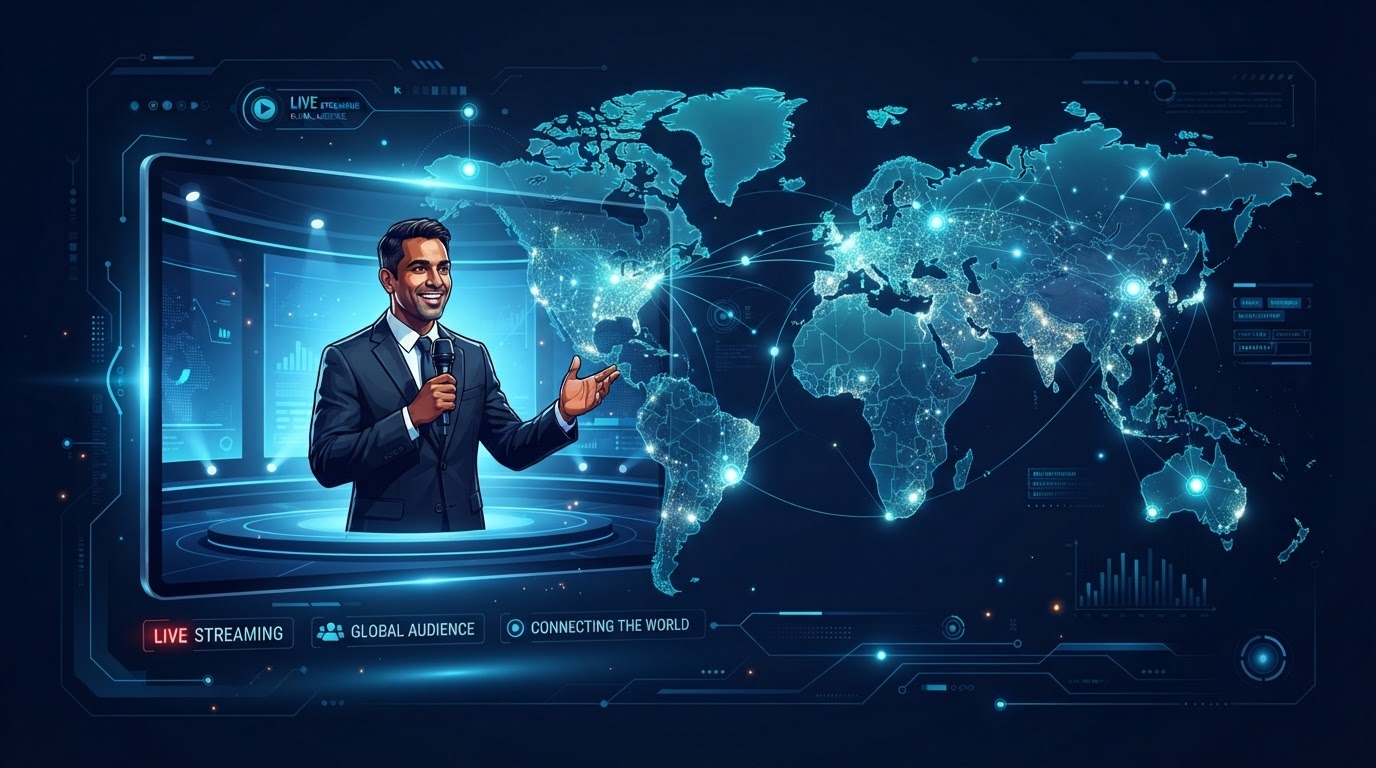
AI presenter technology is improving rapidly. Early versions were stiff and robotic — the uncanny valley was wide. Current technology is narrowing that gap. Presenters look more natural, speak more fluently, and are increasingly difficult to distinguish from a human recording.
The implication is that the tradeoff between scalability and authenticity is shrinking. A business that chose between a human presenter (authentic but not scalable) and an AI presenter (scalable but less authentic) is facing a smaller gap between the two. As the technology matures, the AI presenter becomes a viable default for evergreen and just-in-time webinars — not a compromise, but a choice.
The webinar is shifting from an event that happens to an asset that works. AI creation compresses the timeline from weeks to hours. AI presenters close the authenticity gap. AI Q&A makes automated webinars interactive. The presentation no longer depends on the presenter's availability — and that changes everything about how businesses should use webinars.
Real-time engagement: the end of the silent chat
The silent chat was the structural weakness of automated webinars for years. AI Q&A has addressed this — answering questions in real time using an approved knowledge base. The direction is toward deeper engagement: not just answering questions, but understanding the attendee's context and responding accordingly.
Future AI engagement systems may adapt the presentation based on attendee behavior — going deeper on topics the attendee cares about, adjusting the pace based on engagement signals, and personalizing the offer based on the questions asked. The webinar becomes less a fixed recording and more a dynamic experience that adapts to each attendee. This is the direction the technology is heading.
Personalization: one presentation, many journeys
Personalization is the next frontier. Today, behavioral follow-up segments attendees into broad categories — no-shows, partial viewers, full viewers, offer-clickers. Future systems may personalize at a finer grain: tailoring the follow-up to the specific questions asked, the specific sections watched, and the specific offers clicked.
The same webinar could produce a different journey for each attendee — not just in the follow-up, but in the presentation itself. An attendee who asks about pricing sees a different offer emphasis than one who asks about features. An attendee who drops off at a specific section receives follow-up about that section's topic. The webinar becomes a personalized experience built on a shared foundation — scalable and individualized at the same time.
What this means for businesses
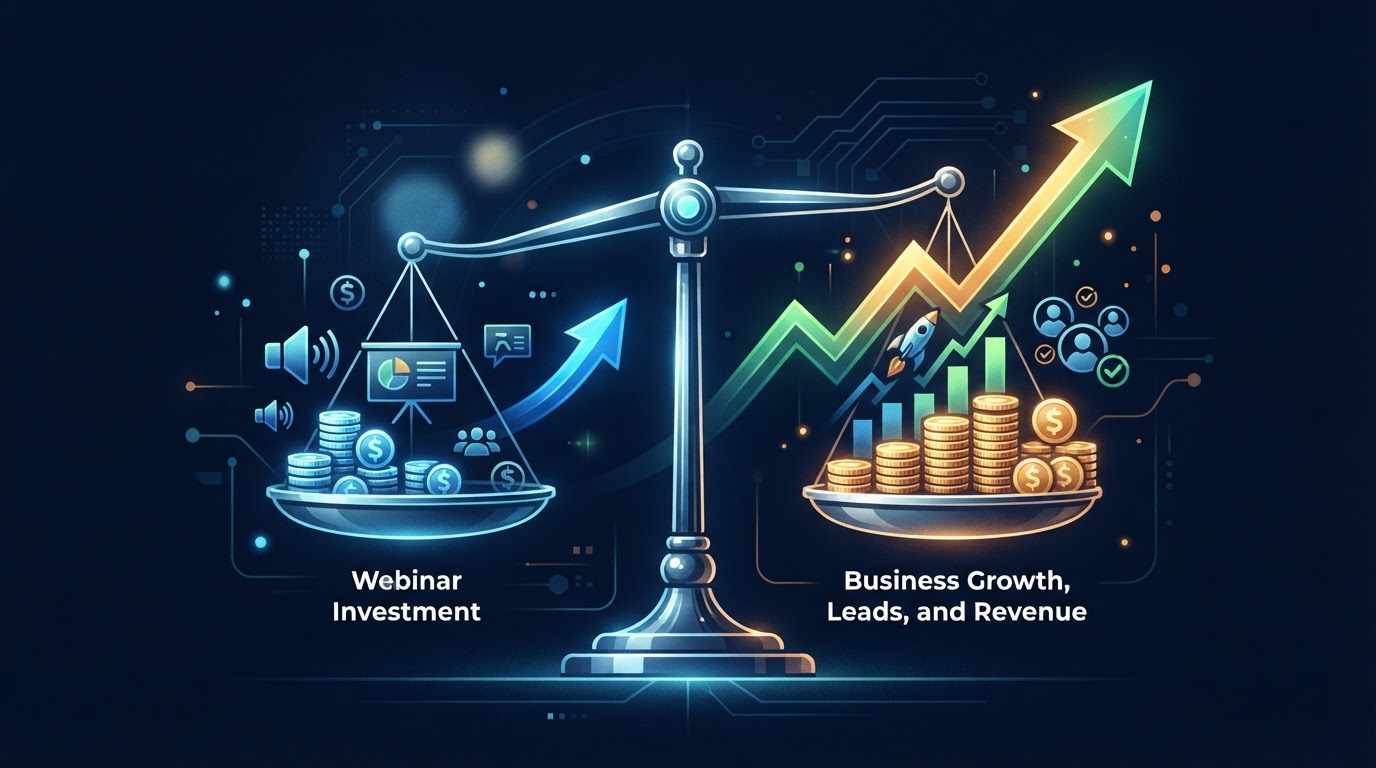
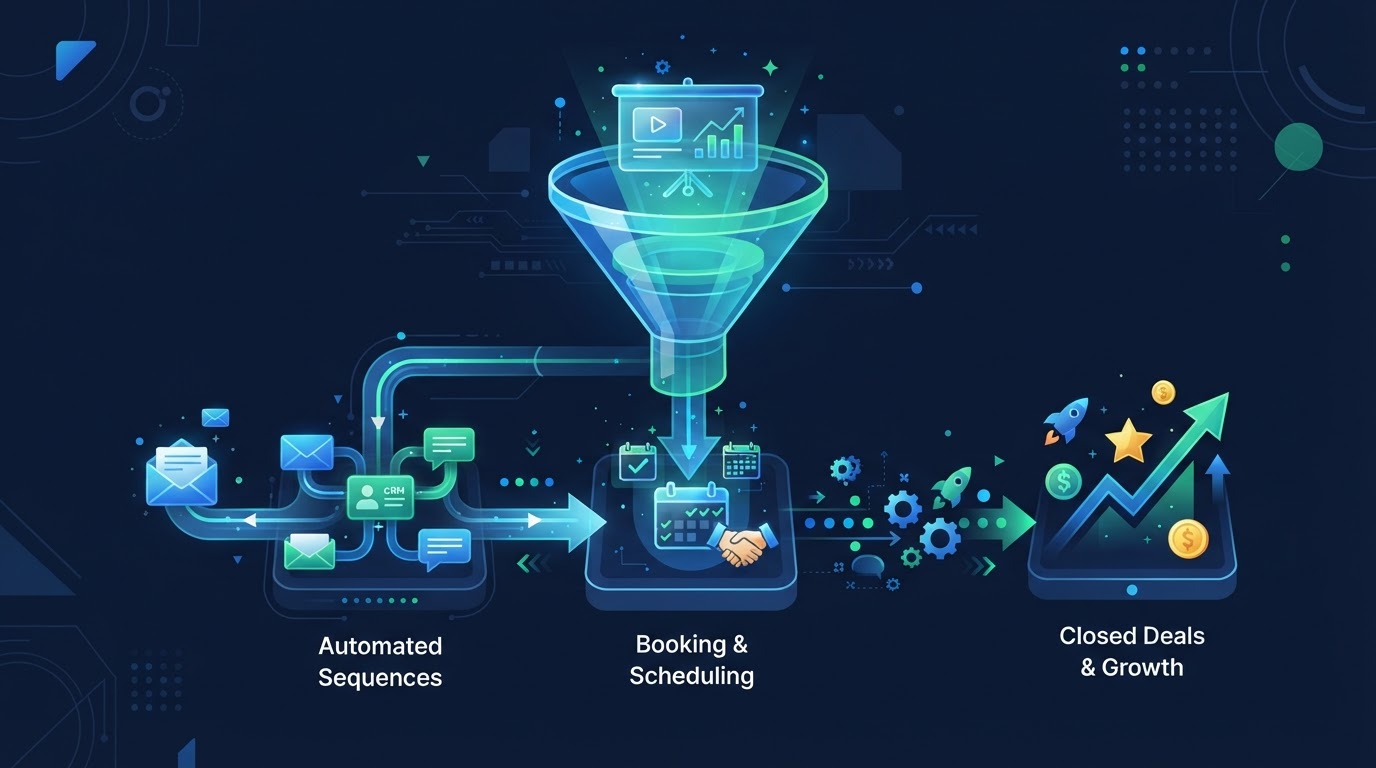
For businesses that present regularly — product demos, educational content, sales presentations, training — the shift from events to assets is an opportunity. The webinar that was a cost center (time, production, promotion) becomes a revenue asset (continuous lead capture, automated engagement, behavioral follow-up). The expertise that was trapped in a person's calendar becomes a scalable asset that works 24/7.
The businesses that adopt this model early will build an advantage. Their webinar assets will compound — each presentation improving, each dataset growing, each follow-up sequence optimizing. The businesses that wait will still be running webinars as events — one at a time, dependent on a presenter, limited by a calendar. The gap between the two approaches will widen as the technology matures.
The future of AI webinars is not about replacing humans. It is about separating the value of the presentation from the availability of the presenter. The expertise stays human. The delivery becomes scalable. The engagement becomes automated. The follow-up becomes behavioral. The webinar becomes an asset. That is the direction — and it is already here.
See AI webinars in action
Watch how WebinarBoostAi creates, presents, and engages with webinars using AI.
Book A DemoFrequently Asked Questions
What is the future of AI webinars?
Webinars are shifting from calendar events to persistent assets. AI creation compresses the timeline from weeks to hours. AI presenters are closing the authenticity gap. AI Q&A makes automated webinars interactive. Behavioral follow-up personalizes the journey. The presentation no longer depends on the presenter's availability.
Will AI replace webinar presenters?
Not entirely. AI presenters are becoming more natural and are a viable choice for evergreen and just-in-time webinars. But for live events, high-trust sales, and situations where a specific person's identity matters, human presenters remain essential. The shift is about separating the value of the presentation from the availability of the presenter — not replacing the presenter entirely.
How is AI changing webinar creation?
AI is compressing the creation timeline. Instead of weeks of strategy, scripting, slide design, and recording, AI generates a complete first draft from a brief — script, slides, presenter, registration page, and follow-up. The human refines. The webinar that took weeks takes hours, and the one that took hours takes minutes.
What will webinar personalization look like in the future?
Future systems may personalize at a finer grain — tailoring follow-up to specific questions asked, sections watched, and offers clicked. The same webinar could produce a different journey for each attendee, with personalized offer emphasis and section-specific follow-up. Scalable and individualized at the same time.
Should businesses adopt AI webinars now?
Early adopters build an advantage. Their webinar assets compound — each presentation improving, each dataset growing, each follow-up optimizing. Businesses that wait will still be running webinars as one-time events, limited by a presenter's calendar. The gap between the two approaches will widen as the technology matures.