
Writing a webinar script is the step most businesses dread. It is also the step that determines whether the webinar converts. A great script carries a mediocre presentation. A weak script sinks a great one. The script is where strategy becomes words — and most businesses spend too little time on it because the blank page is intimidating.
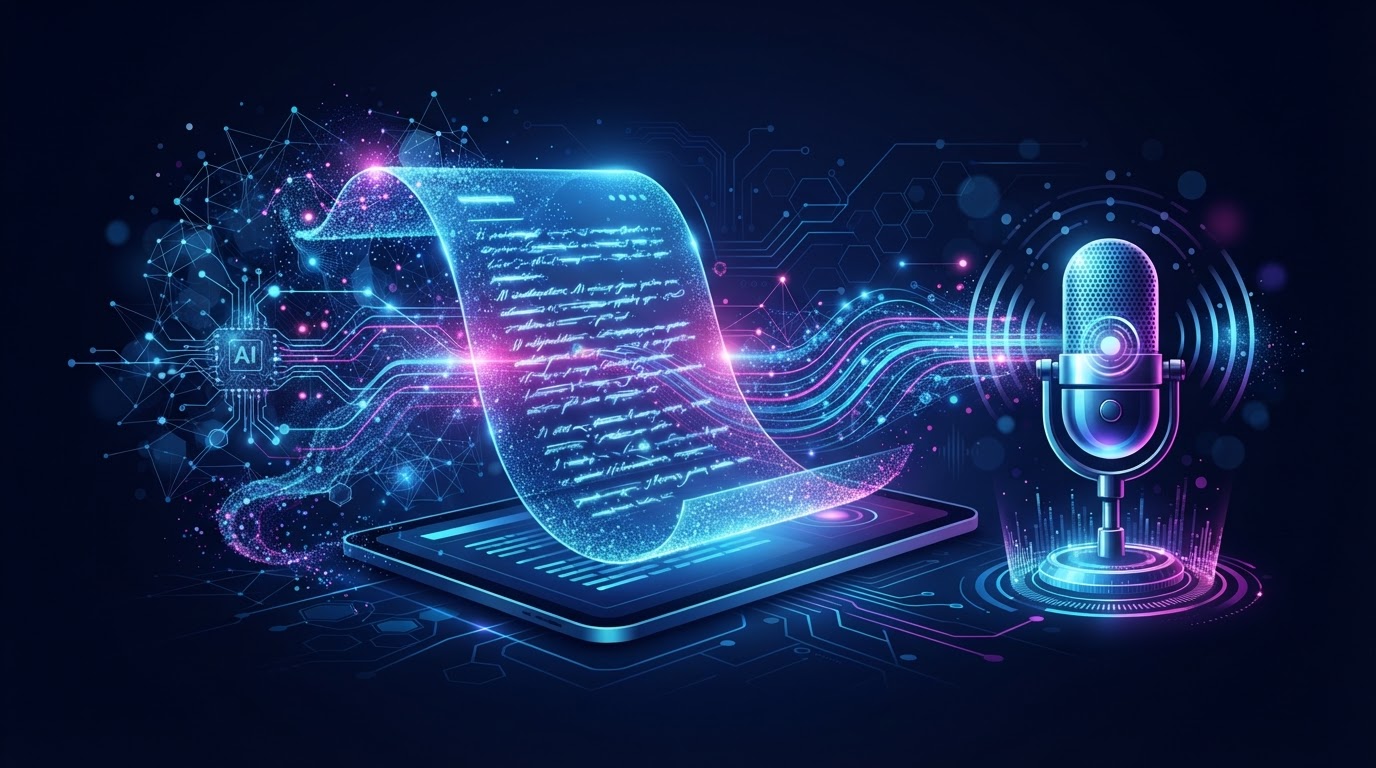
AI changes the blank-page problem. Instead of starting from nothing, you start with a generated draft. The AI takes your brief — audience, problem, offer, key points — and produces a structured script with an introduction, body sections, transitions, and a close. You refine it. The script that took days now takes hours. But the speed is only valuable if the output is good — and that depends on how you use the AI.
The brief is the script's foundation
The quality of an AI-generated script depends almost entirely on the quality of the brief you provide. A vague brief produces a vague script. A specific brief produces a specific script. The brief should include four things: who the audience is, what problem they have, what you want them to do, and what offer moves them toward that action.
The more specific the brief, the better the script. Do not write 'a webinar about marketing automation for small businesses.' Write 'a webinar for small business owners who are losing leads because they cannot follow up fast enough. The desired action is to book a consultation. The offer is a done-for-you automation setup.' The second brief gives the AI enough context to generate a script that speaks to the specific audience, addresses the specific problem, and builds toward the specific offer.
What AI does well in script writing
- Structure — organizing the content into a logical flow: problem, agitate, educate, solution, offer. The AI can take scattered ideas and arrange them into a coherent arc.
- Drafting — producing a first version of each section. The AI generates paragraphs that you can refine, rewrite, or replace. The value is in having something to edit rather than nothing.
- Transitions — connecting sections so the presentation flows. The AI can write the bridge between 'the problem' and 'the solution' that keeps the attendee engaged.
- FAQs — generating the questions attendees are likely to ask, which can be used for the AI Q&A knowledge base and the post-webinar FAQ section.
These are the mechanical parts of script writing — the parts that take time but do not require strategic judgment. The AI handles them. You handle the parts that do require judgment: the specific examples, the accurate claims, the tone, the offer details, and the strategic decisions about what to include and what to cut.
What AI does not do well
AI cannot provide your specific experience. It cannot reference the actual results you have achieved, the specific customers you have helped, or the unique insights you have developed. These are the elements that make a script sound like you — and they must come from you, not from the AI.
AI also cannot make strategic decisions about the offer. It cannot decide whether the price is right, whether the guarantee is strong enough, or whether the urgency is legitimate. These are business decisions that require understanding your market, your margins, and your competitive position. The AI can draft the language around the offer. It cannot design the offer itself.
The AI writes the first draft. You write the final draft. The AI handles structure, drafting, and transitions. You handle experience, accuracy, tone, and strategy. That division is what produces a script that is fast to create and still sounds like you.
The refinement process
Once the AI generates the draft, the refinement process has three steps. First, read the script aloud. Anything that sounds unnatural when spoken will sound unnatural when presented. Rewrite it. Second, add your specifics — real examples, actual results, genuine insights. These are what differentiate your script from a generic one. Third, check every claim for accuracy. The AI may include statements that are plausible but unverified. Verify or remove them.
The refinement is where the script becomes yours. The AI gave you the structure and the draft. The refinement gives it your voice, your experience, and your accuracy. A script that skips refinement sounds like AI. A script that includes refinement sounds like an expert who used AI to work faster — which is exactly what it is.
From script to presentation
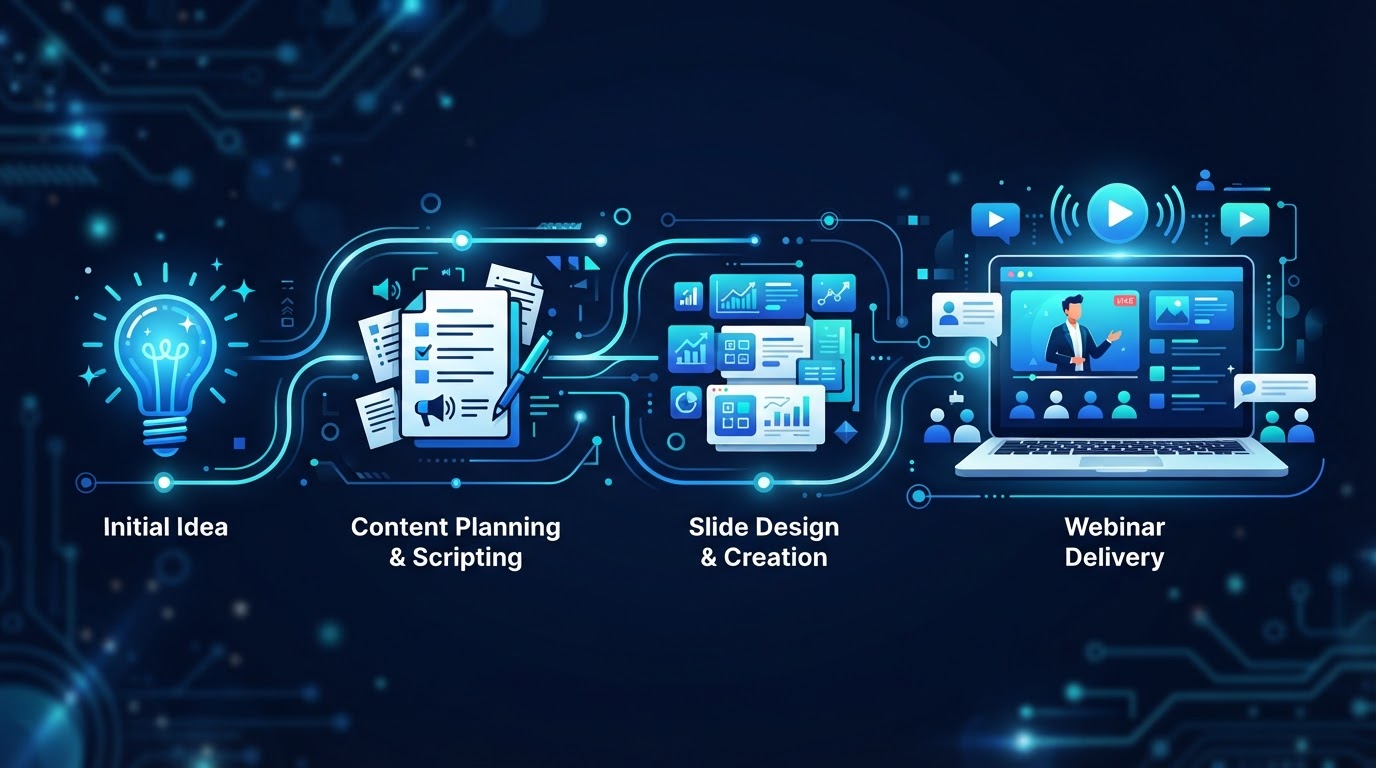
Once the script is refined, it feeds the rest of the webinar production. The script becomes the basis for the slides — each section of the script maps to a slide or group of slides. The script becomes the basis for the AI presenter — the words the presenter will speak. The script becomes the basis for the AI Q&A knowledge base — the key points and FAQs the AI will use to answer attendee questions.
This is the advantage of an integrated AI webinar platform. The script is not a standalone document. It is the source material that feeds the slides, the presenter, and the Q&A. Write the script once, and the entire webinar production flows from it. The script is the single point of truth for the presentation — and AI-assisted writing makes creating it faster without compromising quality.
See AI webinars in action
Watch how WebinarBoostAi creates, presents, and engages with webinars using AI.
Book A DemoFrequently Asked Questions
Can AI write a webinar script?
Yes. AI can generate a structured script from a brief — organizing content into a logical flow (problem, agitate, educate, solution, offer), drafting each section, writing transitions, and generating FAQs. The AI handles the mechanical parts; you handle experience, accuracy, tone, and strategy.
How do I use AI to write a webinar script?
Provide a specific brief: who the audience is, what problem they have, what you want them to do, and what offer moves them toward that action. The more specific the brief, the better the script. Then refine the draft: read it aloud, add your specific examples and experience, and verify every claim for accuracy.
What should I include in an AI webinar script brief?
Four things: the audience (specifically, not generically), the problem they have, the desired action you want them to take, and the offer that moves them toward that action. Include key points, examples, and any specific language or terminology the audience expects.
What does AI do poorly in webinar script writing?
AI cannot provide your specific experience, reference actual results, or make strategic decisions about the offer (price, guarantee, urgency). It also cannot verify claims — it may include plausible but unverified statements. These elements must come from you through the refinement process.
How long should an AI-generated webinar script be?
It depends on the webinar length and format. A 30-minute webinar typically needs 3,000-4,000 words of script. A 60-minute webinar needs 6,000-8,000. The AI can generate the full draft; you refine it. The script should be conversational — written to be spoken, not read.